



EV charging is becoming community infrastructure.
As electric vehicles become a larger part of transportation, charging access increasingly functions like other forms of infrastructure: its value depends on where it is available, how reliable it is and whether people can realistically use it.
A charging network concentrated only around a narrow set of destinations can leave gaps for renters, multifamily residents, small businesses and neighborhoods where private garage charging is less common.
For Welsh Global Energy, expanding access means thinking beyond the charger itself and looking at the places people already use every day - homes, workplaces, apartments, community organizations, faith-based properties, retail destinations and public-facing sites.
Why location matters
Charging access is fundamentally a location problem. A driver who can charge at home has a very different experience from someone who parks on the street, lives in a multifamily building without charging or depends on public infrastructure.
Building a more useful charging network requires attention to both high-demand commercial corridors and neighborhoods that have historically had fewer charging options. The goal is to make sure infrastructure planning reflects how different communities actually move and park.
Multifamily and renter access are part of the equation
Many residents do not control the electrical infrastructure or parking facilities where they live. Apartment and condominium properties can therefore play an important role in expanding practical access to charging.
The planning questions are similar to other commercial sites - electrical capacity, parking allocation, dwell time, access control, billing, maintenance and future growth - but the resident experience matters just as much.
Community anchors can expand charging reach
Churches, community centers, local businesses, mixed-use properties and other neighborhood destinations can become important pieces of a broader charging network when the site and operating model make sense.
These locations can serve people while they are already spending time in the community. Site suitability still matters. Power availability, parking, accessibility, ownership, operating hours and expected usage all need to be evaluated before a project is designed.
Partnerships matter as much as equipment
Community-focused infrastructure is rarely just a hardware question. Property owners, local organizations, utilities, municipalities, contractors and charging providers may all have roles in moving a project from idea to operation.
Clear responsibilities are important: who owns the equipment, who maintains it, who pays for electricity, who supports drivers, how access is managed and what happens when demand grows.
Reliability and accessibility are part of equity
Access is not meaningful if charging is confusing, difficult to reach or routinely unavailable.
Projects should consider physical accessibility, parking design, lighting, signage, payment or access methods, networking, maintenance and support. Equity in infrastructure is therefore not only about where a charger is installed. It is also about whether the charging experience is practical and dependable.
Chicago is a natural place for this conversation
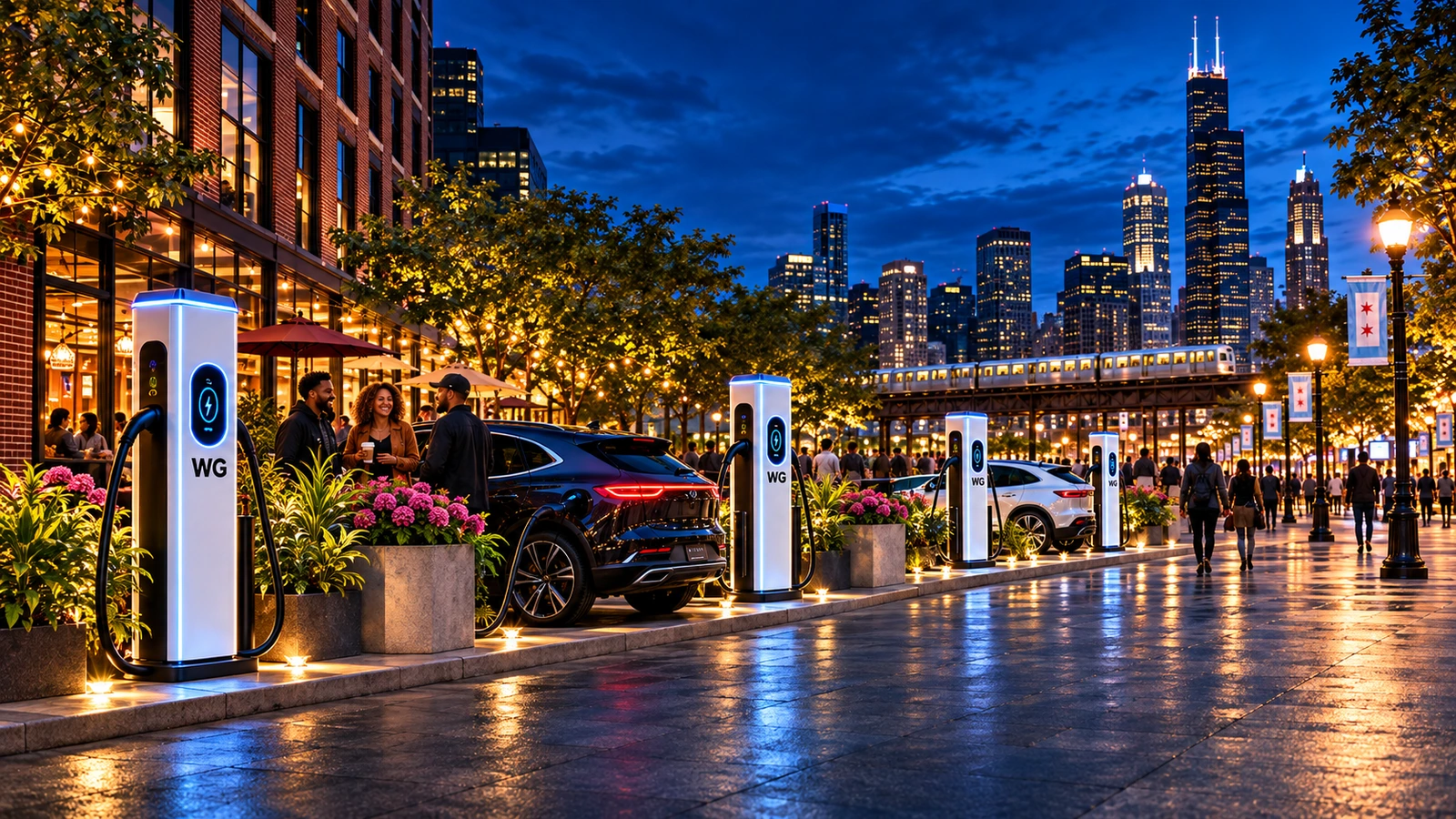
Chicago combines dense neighborhoods, multifamily housing, major employment centers, community institutions and regional travel corridors. Those different environments create very different charging needs within the same metro area.
A downtown garage, neighborhood mixed-use property, church parking lot, apartment building and suburban workplace should not be approached with the same assumptions.
WGE's community approach
Welsh Global Energy's broader brand strategy emphasizes accessibility, community impact and practical clean-energy infrastructure.
A community-focused EV project should ask:
- Where are charging options limited today?
- Who would realistically use this site?
- How long do vehicles stay?
- What power and parking are available?
- Is the site easy to access and understand?
- Who will operate and maintain the chargers?
- How can the site support future demand?
Conclusion
The clean-energy transition becomes more useful when charging is available across a wider range of neighborhoods and destinations.
Expanding access does not mean lowering technical or operational standards. It means applying the same disciplined site planning to communities and properties that may have had fewer charging options in the past.
Welsh Global Energy is interested in partnerships that connect reliable EV charging with the places people already live, work, worship, shop and gather.
Explore community partnership opportunities at WelshGE.com.
Frequently Asked Questions
What does equitable EV charging access mean?
It means planning charging so a wider range of communities and property types can realistically use it, with attention to location, accessibility, reliability and operating model.
Why is multifamily charging important?
Residents without private garages may depend more heavily on shared or public charging. Multifamily properties can help close that practical access gap when infrastructure is planned around resident needs.
Can churches and community organizations host EV chargers?
Potentially, yes. Site power, parking, accessibility, ownership, operating hours, expected usage and project economics should all be evaluated before moving forward.