




Where should EV chargers go on a commercial property? The most obvious parking spaces are not always the best locations.
Charger placement can affect electrical routing, trenching, conduit, cable reach, accessible routes, traffic circulation, equipment protection, user visibility and future expansion. That is why placement should be treated as a site-design decision rather than a simple parking decision.
The strongest charging layouts work for drivers and for the infrastructure behind the charger.
Start with the electrical source
Distance matters. The relationship between the proposed charging spaces and the site's electrical service, panels, transformers or other distribution equipment can influence construction scope and routing.
A parking space that appears ideal from a driver's perspective may require a long conduit path or substantial site work. Another location may reduce infrastructure complexity while still providing a good user experience.
Conduit and trenching can shape the layout
Commercial charging often requires a physical path between the electrical source and the charger. Depending on the property, that can involve conduit, trenching, surface restoration, garage routing or other construction.
Thinking about those paths early can help the project team evaluate charger locations before the parking plan is finalized.
Accessibility should be considered at the beginning
Accessible EV charging should not be treated as a late-stage adjustment. Site planning should consider how drivers approach the charging space, exit the vehicle, reach the equipment, operate the controls and connect to an accessible route where applicable.
Specific accessibility and code requirements vary by project and jurisdiction, so final design decisions should be reviewed by qualified professionals.
Cable reach and equipment orientation matter
The charger needs to physically work with the vehicles using it. Equipment orientation, cable length, vehicle charge-port locations, curb position and wheel-stop placement can affect whether drivers can connect safely and conveniently.
A location that looks good on a site plan can still create a frustrating user experience if cable reach or vehicle positioning is not considered.
Plan for traffic and parking behavior
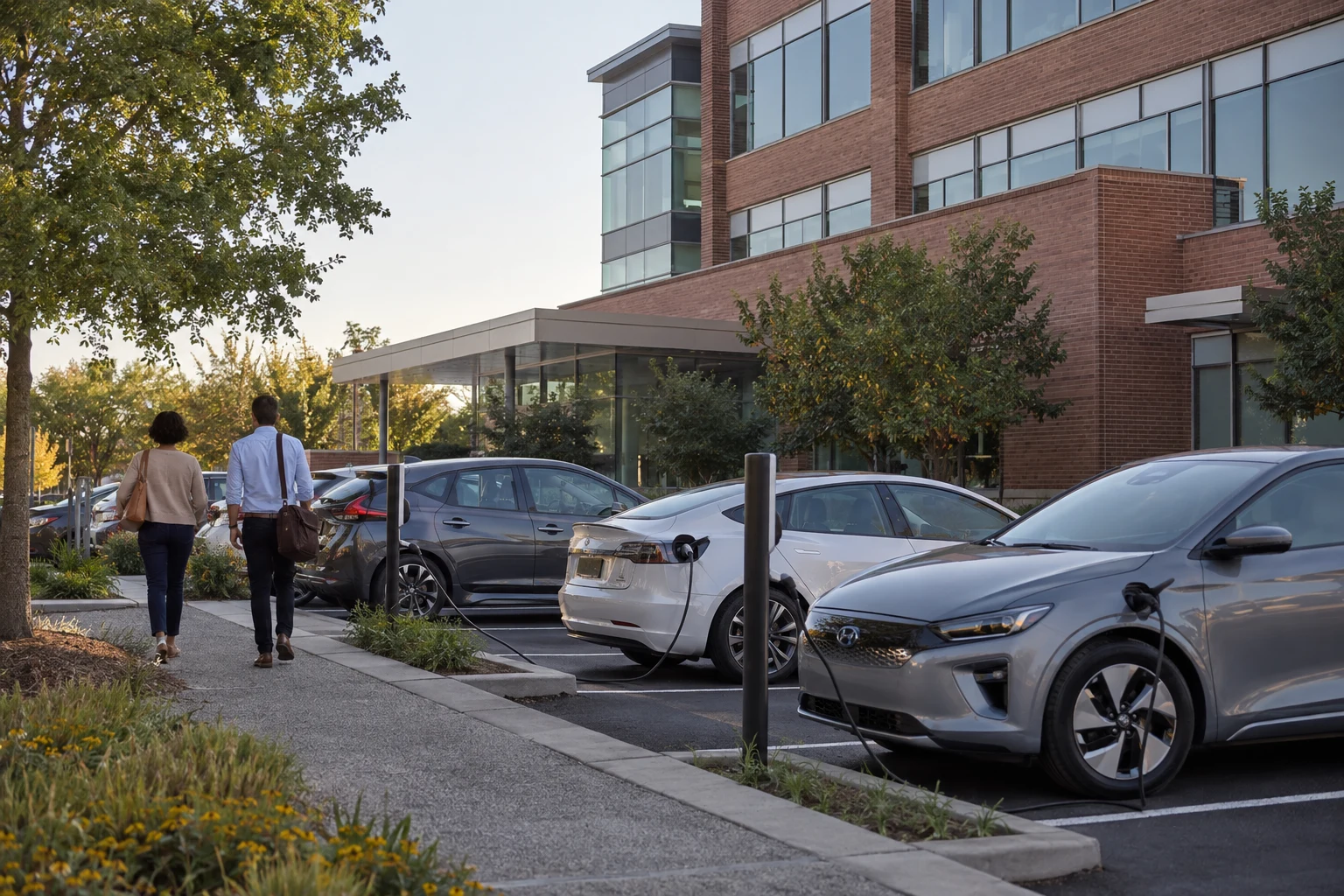
EV charging spaces are part of the property's traffic system. Placement can influence circulation, backing movements, pedestrian routes, snow removal, delivery access and the potential for non-charging vehicles to block charging spaces.
Workplaces, multifamily properties, fleet yards, retail sites and public charging locations can each have very different traffic patterns.
Visibility, lighting and security also matter
Charging equipment may be easier to use when it is visible, well-lit and located where drivers can understand how to enter, park and exit. The site may also need to consider bollards, curbs or other measures that protect equipment from vehicle impacts.
Weather exposure can influence the design
Outdoor equipment is designed for environmental conditions, but the property should still think about drainage, snow storage, landscaping, irrigation, debris and other site conditions that can affect access or maintenance.
Do not forget future expansion
A first phase may include only a few charging ports. If the property expects demand to grow, charger placement should be evaluated with future parking spaces, conduit paths, electrical capacity and networking in mind.
A location that works perfectly for two chargers today may create unnecessary limitations if the next ten chargers have nowhere logical to go.
Five placement questions to answer before construction
- Where is the site's usable electrical infrastructure?
- What route will power take to the charging spaces?
- How will drivers, pedestrians and accessible routes interact with the chargers?
- Will cables reach the vehicles that are expected to use the site?
- How can the layout support future charging growth?
The parking space is only part of the decision
Good EV charger placement balances user convenience with electrical infrastructure, construction, accessibility, traffic and long-term planning. The objective is not to choose the closest or most visible parking spaces by default. It is to choose locations that make sense for the complete site.
Plan EV charger placement with WGE
Welsh Global Energy approaches commercial charging placement as part of the broader site-planning process. WGE evaluates the property, electrical infrastructure, intended users, charger locations and future goals before the final charging approach is determined.
Planning a commercial EV charging project? See what goes into EV site planning at WelshGE.com. Energy Everywhere You Go.
Frequently asked questions
Where is the best place to install commercial EV chargers?
The best location depends on electrical infrastructure, parking behavior, accessibility, cable reach, traffic flow, construction requirements and future expansion.
Should chargers be installed in the parking spaces closest to the building?
Not automatically. Those spaces may be convenient but could create longer electrical runs, accessibility conflicts or other site-design issues.
Does distance from the electrical panel matter?
Yes. Routing distance can affect conduit, trenching, wiring and construction scope, although the best solution is site-specific.
How does accessibility affect EV charger placement?
Accessible routes, space configuration, equipment reach and user access should be considered early. Final requirements should be reviewed by qualified professionals.
Should EV charger placement account for future expansion?
Yes. Future conduit paths, parking locations, electrical capacity and networking can be easier to plan before the first phase is built.
Do commercial chargers need protection from vehicles?
Depending on the location and equipment, site design may include bollards, curbs or other protective measures. Requirements are project-specific.