



Installing an EV charger is an important milestone, but it is not the end of the project.
Once charging equipment is active, the property still needs to think about how drivers will access it, how charging sessions will be managed, who responds when something goes wrong, how parking spaces will be used, and how the system may need to change as demand grows.
For businesses, multifamily properties, fleets, workplaces, hotels, and other commercial sites, a successful EV charging strategy includes both the installation and the day-to-day operation that follows.
Decide Who Can Use the Chargers
Start with the people the charging system is intended to serve. Employees, residents, customers, guests, fleet drivers, tenants and members of the public may have different schedules and access needs. A workplace may reserve charging for employees during business hours, while a multifamily property may need resident access and a separate process for visitors.
Charging can be public or controlled through an app, account, credential, RFID card, resident access, employee access or another authentication method supported by the equipment and network. EV charger access control should match the property's operating model and the capabilities of the selected system.
Decide who can approve new users, remove access when someone leaves and help a driver who cannot start a session. Communicate access hours and instructions clearly, including any arrangements for guests or users who need assistance.
Decide Whether Charging Will Be Free or Paid
There is no single charging model that works for every property. Free amenity charging may support employees, customers or guests. Paid charging may fit a public-facing site, while resident billing may be appropriate for a multifamily property that wants to account for individual usage.
Before choosing a model, understand how the supported payment or billing system works. Review transaction and network fees, who receives payments, and who manages billing records. If charging is free, identify who covers the electricity and ongoing operating costs.
Explain pricing before a driver begins charging. Make any session, time-based or other supported charges clear, and give users a contact for billing questions, disputed transactions or payment problems. EV charger payments are part of the operating experience, not just a setting selected at installation.
Plan for Monitoring and Support
Commercial EV charger management includes knowing what is happening after the equipment goes live. Depending on the system, monitoring may provide charger status, charging-session visibility, fault notifications and usage information. Confirm which features are available and who has access to them.
Assign responsibility for reviewing alerts and responding to problems. A driver may need help starting a session, a charger may report a fault, or a network connection may stop reporting status. A clear escalation process should identify the property contact, network support team, equipment provider and qualified service professionals involved.
Post driver-support instructions where users can find them, including how to identify the charger when reporting an issue. Establish who follows up and how the property communicates an unavailable charging space. Monitoring helps teams notice problems; resolving them still requires an agreed support process.
Understand Maintenance Responsibilities
EV charger maintenance and operations require a clear division of responsibility. Equipment inspections, cable and connector condition, enclosure damage, cleanliness and physical maintenance should be addressed according to manufacturer guidance, site conditions and the property's service arrangements.
Software updates, networking and EV charging network management also need an owner. Confirm who manages updates, connectivity, account administration and technical support, and how those responsibilities are coordinated with on-site maintenance.
Keep warranty terms, service contacts and equipment records accessible. Understand what the warranty covers, who authorizes repairs and who pays for work outside that coverage. Inspection needs and service schedules vary by equipment and environment; agree on a site-specific plan instead of assuming a universal maintenance interval.
Think About the Parking Space Too
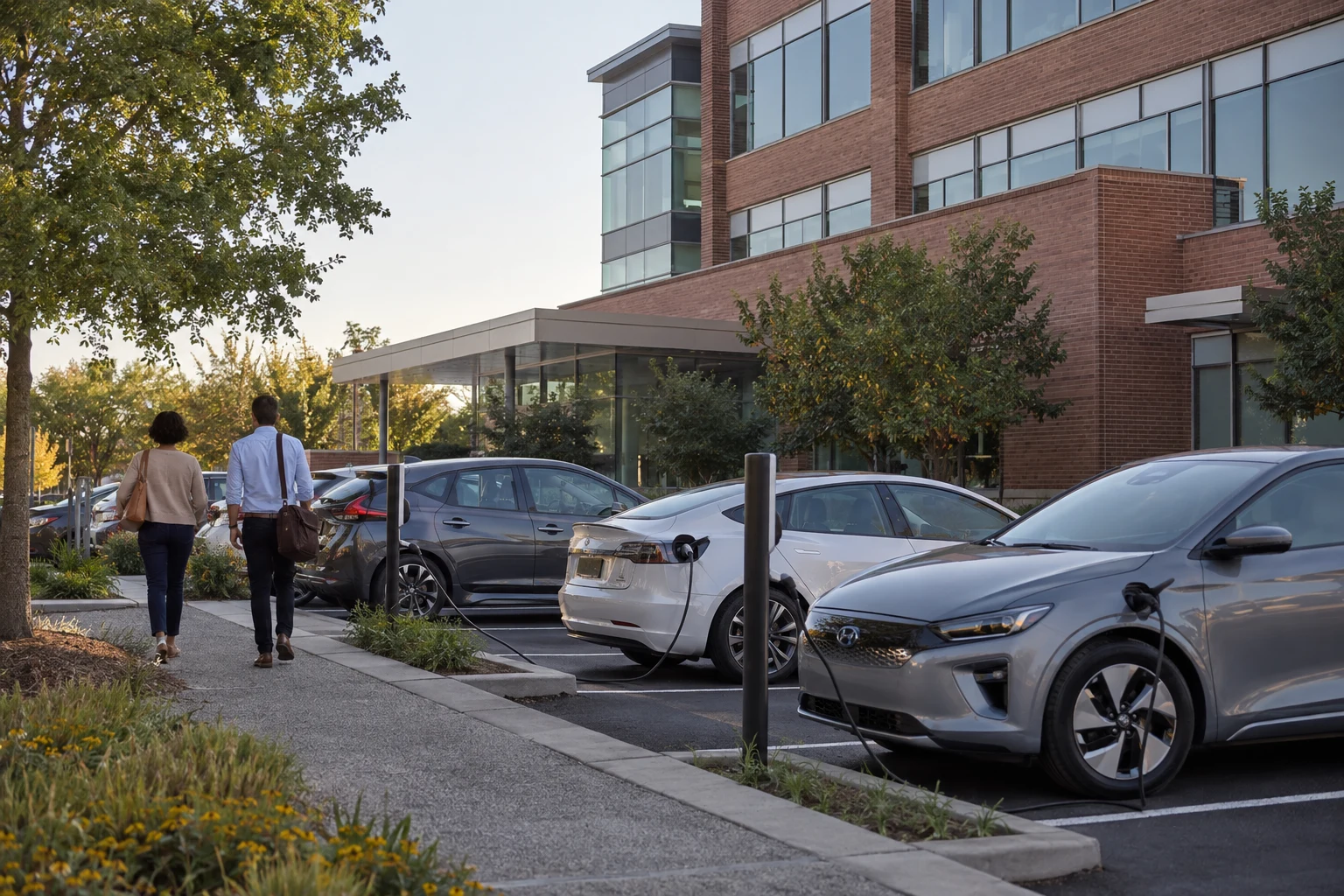
A working charger is only useful if drivers can reach it. Blocked spaces, non-EV vehicles parked in charging stalls and EVs remaining after charging can all affect availability. Decide how the property will communicate and manage those situations.
Signage, time limits, guest access and instructions for moving a vehicle should reflect how the property is used. Identify who handles parking questions and how charging rules fit existing parking policies.
Review accessibility, routes to the equipment and the surrounding parking layout with qualified professionals for the specific project. Keep paths clear and account for lighting, snow, ice, drainage, landscaping and other environmental or site-maintenance needs. Equipment protection and cable management should also be considered where site conditions call for them.
Use Charging Data to Understand Demand
Actual charging usage can help the property understand how the system is serving drivers. Review available data on peak demand, frequently used chargers, session timing and session duration. A charger that is consistently occupied may point to a different need than one that is seldom used.
Look at patterns alongside what staff and drivers are reporting. Limited access hours, unclear instructions or parking conflicts may affect usage even when the equipment is functioning. Data can inform changes to access, pricing, time limits or support processes.
Over time, those observations can help operators evaluate whether additional charging ports are needed. What the data shows depends on the system and the site; it should support planning decisions without being treated as a promise of revenue or financial return.
Plan for Future Growth
The first installation may serve today's users while leaving room for future demand. Think about additional charging ports, parking layout, conduit pathways, electrical capacity and networking before expansion becomes urgent.
Evaluate how load management and future equipment could fit the site's electrical strategy. New ports, different charging equipment or additional building loads may require further review of available capacity and system compatibility.
Expanded user groups can also change operations. A resident-only system that later serves guests, or a workplace that adds fleet charging, may need different access rules, billing arrangements and support responsibilities. Revisit the operating plan as the property and its charging demand evolve.
Installation Is Only the Beginning
Successful EV infrastructure includes both building the system and operating the system. Access, payments, monitoring, maintenance, support, parking policies and future growth all shape what happens after the installation is complete.
Welsh Global Energy helps property operators think about the full infrastructure lifecycle, connecting the initial site plan and equipment decisions with the people and processes needed for ongoing EV charging operations. The goal is a charging strategy built around the property, its users and its long-term needs.
Planning an EV charging project?
Learn more at WelshGE.com.
Energy Everywhere You Go.