

The short answer
Cook County has more than two-and-a-half times as many registered EVs as it did in spring 2023
Illinois Secretary of State data lists 18,635 electric vehicles in Cook County on April 15, 2023 and 48,921 on August 15, 2026. That is an increase of 30,286 vehicles, or 162.5% in a little over three years. The same August 2026 report lists 28,014 electric vehicles in Chicago.
August 2026
since April 2023
August 2026
Registrations do not tell us where every driver charges, how often a public port is available, or whether a particular neighborhood has enough reliable infrastructure. They do show that charging is no longer a niche planning question for Chicagoland properties.
More vehicles create a more local charging problem
As adoption grows, drivers need charging woven into ordinary routines: where they live, work, shop, gather, and park for longer periods. A station that looks impressive on a map can still miss the mark if it is hard to enter, frequently blocked, poorly lit, incompatible with expected dwell time, or too expensive to operate.
Illinois is investing in public infrastructure. The Illinois EPA’s current map includes more than 450 state-funded or state-supported public charging stations. The agency is careful to note that the map is not a count of every public station in Illinois and that some awarded sites are not yet online. That distinction matters: announced capacity and dependable, driver-ready capacity are not the same thing.
Local planning lens
For an apartment building, workplace, faith organization, retailer, or community site, the best question is not simply “How many chargers can fit?” It is “Who needs to charge here, for how long, and what experience can this property support reliably?”
Five priorities for a Chicago-area charging project
-
Match charging speed to dwell time.
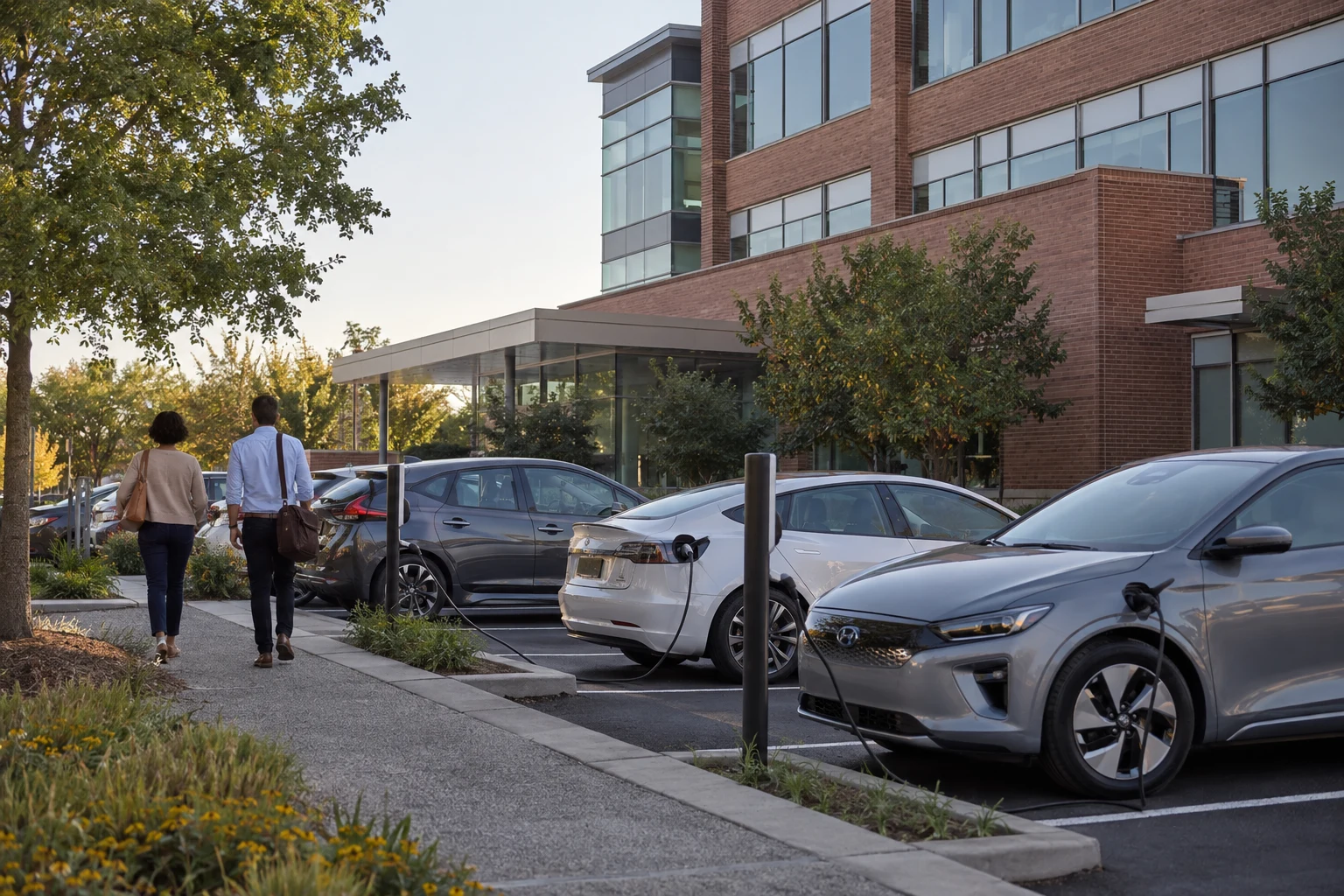
Level 2 charging often fits homes, multifamily parking, workplaces, hotels, and community destinations where vehicles remain parked for hours. DC fast charging can fit quick-turn sites and fleets, but it usually brings greater power, construction, and utility-coordination needs.
-
Study the electrical system before selecting equipment.
Available service capacity, panel space, distance to parking, trenching, and demand charges can change the project more than the charger price. A site assessment should come before a hardware commitment.
-
Plan a phased system, not a one-time installation.
Conduit, reserved panel capacity, and load management can make it possible to start with a practical number of ports and add more as use grows. The least expensive future charger is often the one whose pathway was planned during the first phase.
-
Design for access and Chicago weather.
Accessible routes, stall dimensions, cable reach, lighting, signage, drainage, bollards, and snow storage all affect whether a station works in daily life. These details belong in the site plan, not on a punch list after installation.
-
Budget for operation as well as construction.
Networking, payment processing, connectivity, inspections, maintenance, and repair responsibilities should be decided before the station opens. Uptime is part of the product.
Growth does not remove the need for equitable siting
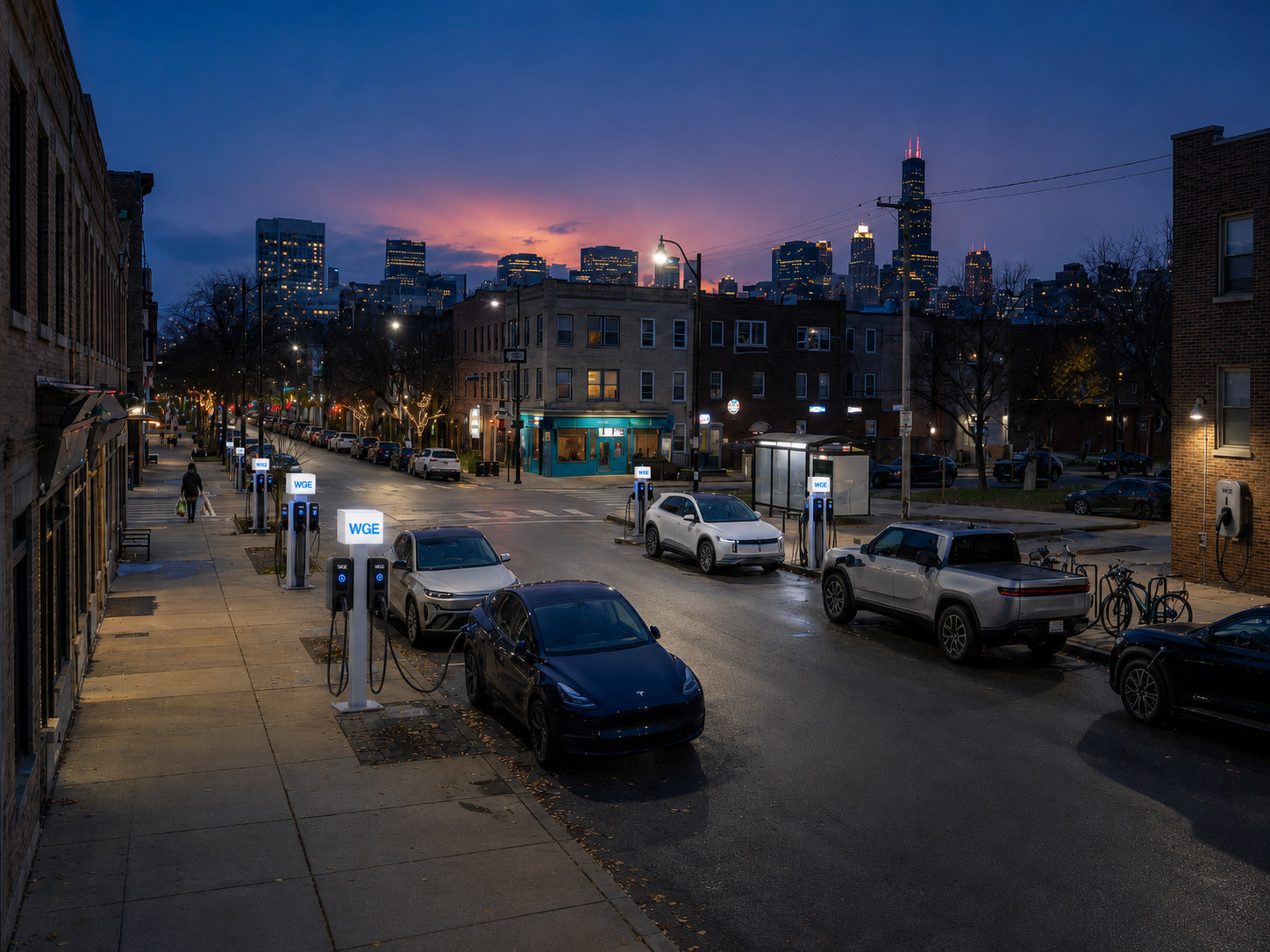
Rising countywide registrations do not guarantee equal charging access. Renters, residents without a private garage, and drivers who rely on street parking face a different set of constraints than homeowners with dedicated parking. Community anchors and multifamily properties can help close that practical gap when projects are based on actual parking patterns and are designed for safe, simple use.
Welsh Global Energy is headquartered in Chicago and serves Chicago and the broader Chicagoland area. Our role is to help property teams translate demand into an installable plan: site assessment, equipment strategy, permitting and utility coordination, commissioning, and long-term support.
Start with the site
Turn growing demand into a right-sized charging plan.
Tell us about your parking, property use, and electrical service. We will help identify the questions that need answers before equipment is ordered.
Official sources
- Illinois Secretary of State — Electric vehicle counts, April 15, 2023
- Illinois Secretary of State — Electric vehicle counts, August 15, 2026
- Illinois EPA — Driving a Cleaner Illinois funding and station map
This article is general planning information, not engineering, legal, tax, or incentive-eligibility advice. Program details and requirements can change.